"As homes get bigger, things should get harder." That was the operating philosophy a citizen-led growth advisory committee brought to Pitkin County commissioners in 2023, arguing that the county's largest houses had grown out of proportion with the community's labor force, its power grid, and its climate goals. The commissioners didn't adopt the committee's exact numbers, but months later they acted on the spirit of it, and the by-right size of a new house in unincorporated Pitkin County got smaller almost overnight.
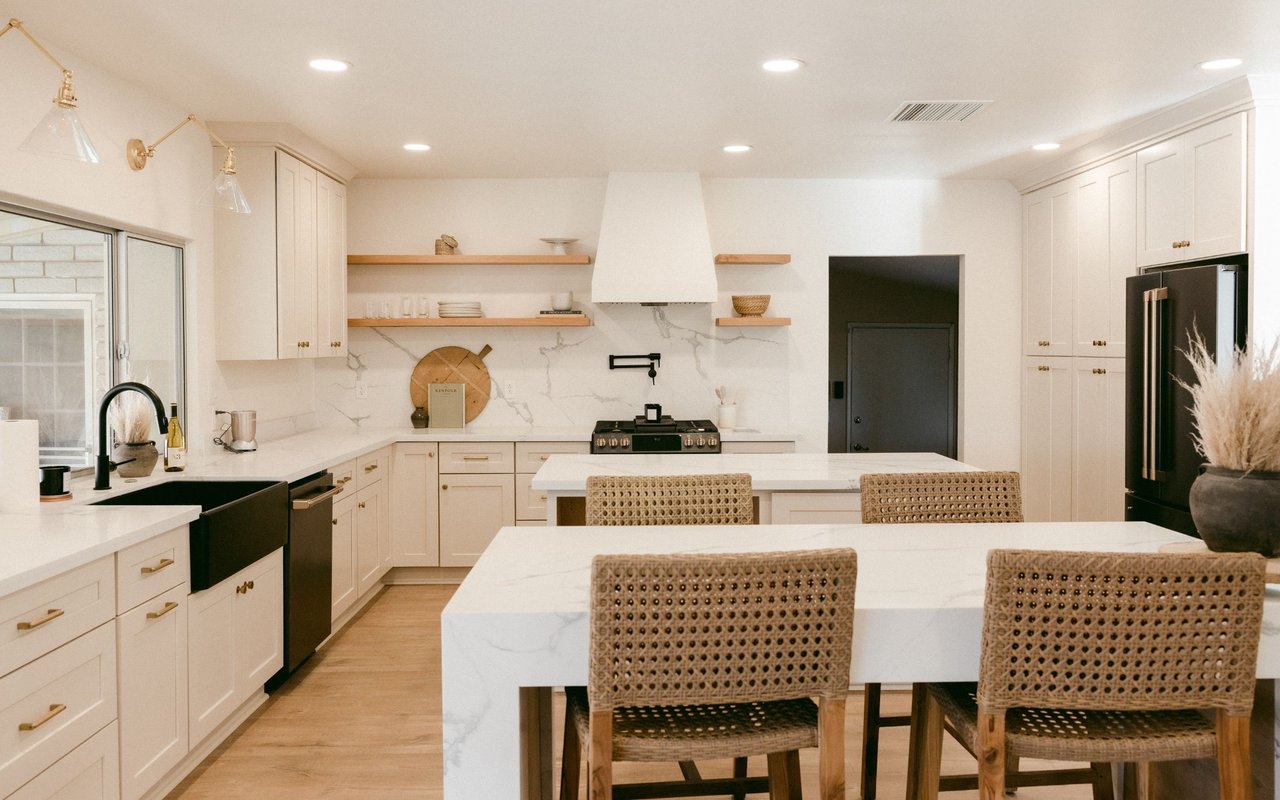
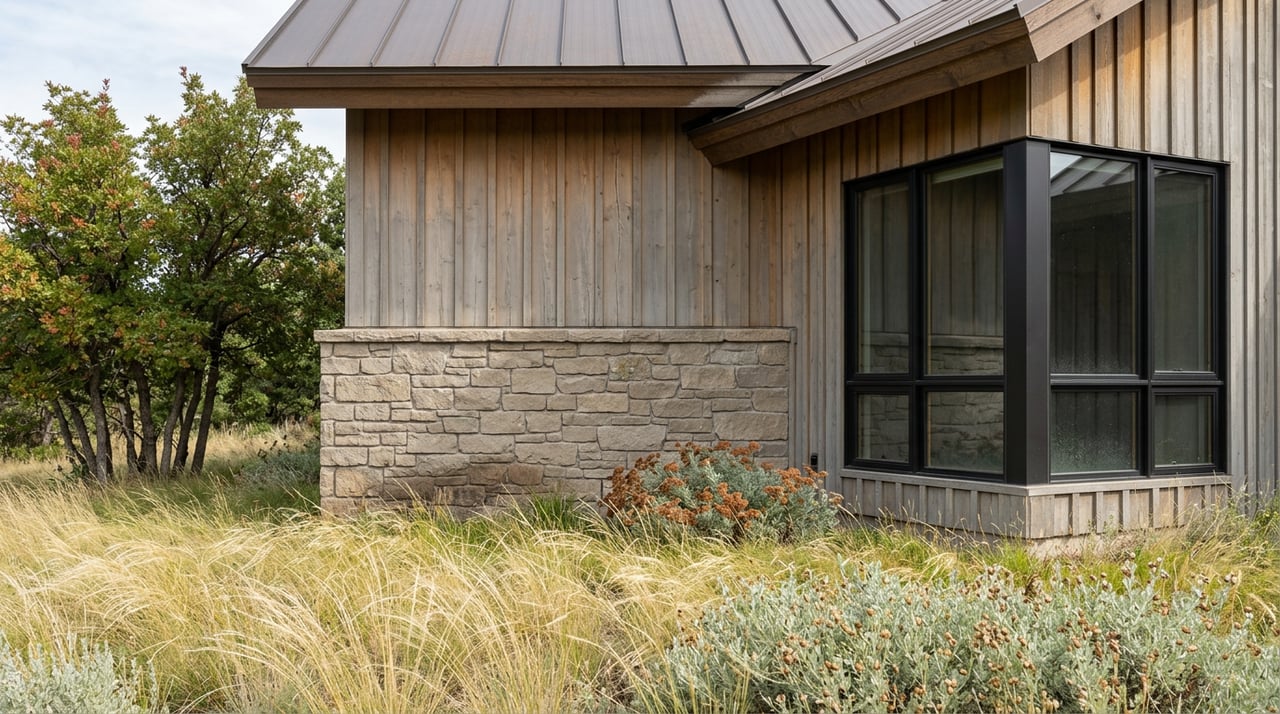
At almost the same moment, on a ridge above town in Starwood, a nearly 15,000 square foot compound was finishing five years of design, permitting, and construction. It is now on the market for $75 million, and by most accounts it is the largest new-construction home ever built in Aspen. It is also, under the rules in place today, close to impossible to replicate. That contradiction is the story worth understanding if you're weighing what a listing price in Starwood, McLain Flats, or Red Mountain is actually telling you.
A Gate, a Legacy, and a Deadline Nobody Announced
Starwood is Aspen's only gated residential community, set behind a 24-hour gatehouse above McLain Flats with private roads and unobstructed views of the Elk Mountain Range. Its reputation for discretion isn't marketing language. Singer-songwriter John Denver once owned a home and recording studio there, and he helped fund the neighborhood's early security infrastructure, a legacy that still shapes how private the enclave feels decades later.
The new estate on Carroll Drive sits inside that legacy, but it also sits on the far side of a regulatory line the county drew after the project was already underway. Designed by Ken Adler of KA DesignWorks and built by Janckila Construction for developer Whitecap Designs, the home took more than five years to move from planning to move-in ready, according to Robb Report's coverage of the listing. That timeline places the permitting well before the county's 2023 downzoning took effect, which is the only reason a house this size could be finished at all. Robb Report put it plainly: recent changes to local development rules have made projects of this scale far harder to approve today. In practice, this house isn't just large. It's a record of what used to be allowed.
The Vote That Cut Every Future House by Nearly a Third
In November 2023, the Pitkin County Board of County Commissioners voted 4-1 to reduce the maximum floor area for a new house in most of unincorporated Pitkin County from 15,000 square feet to 9,250, according to Aspen Daily News. Some areas got tighter treatment still.
| Area | New house-size cap |
|---|---|
| Most of unincorporated Pitkin County | 9,250 sq ft |
| Brush Creek, Capitol Creek, lower Snowmass Creek, Basalt Urban Growth Boundary | 5,750 sq ft |
| Emma area | 8,250 sq ft |
The cap wasn't a symbolic gesture. County staff had commissioned a study of nearly 900 homes and found that houses larger than 5,750 square feet made up only 15 percent of the single-family inventory in unincorporated Pitkin County as of 2019, yet accounted for 43.4 percent of total residential energy-use emissions. Buildings represent roughly 70 percent of the county's greenhouse gas footprint under its climate action plan, and the largest homes were doing outsized damage to that number. The math behind the cap was about energy load and staffing strain as much as aesthetics. A commissioner on the growth committee described the county's biggest houses as functioning like their own micro-economies, drawing repeat trips from cleaning crews, caretakers, and delivery vehicles in a county already short on workers.
Grandfathered, Not Repeatable
What makes the cap matter for buyers rather than just planners is how it was written. Commissioners debated whether to let landowners use transferable development rights, known as TDRs, to build past the new cap by purchasing unused floor area from another parcel. Two commissioners pushed back hard against that idea, and the county ultimately removed one of four exemptions that would have made the cap easier to exceed. The 9,250 square foot ceiling was also adopted as an interim measure, with county officials signaling further tightening could follow. Nothing about this points toward the cap loosening.
There's a second layer worth knowing. Earlier in 2023, when the growth committee first floated stricter limits, it wasn't clear how a new state law limiting local anti-growth measures would interact with the county's plans, according to reporting in the Aspen Times. The commissioners moved ahead with the reduction anyway that November, which suggests the county believes its exception holds. For a buyer, that means the cap isn't a temporary quirk waiting to be challenged in court. It's the operating rule, and it has already survived its first real test.
Put those two facts together and the Starwood estate stops looking like an unusually large listing. It looks like one of the last houses that can legally be that size, sitting next to thousands of acres where no one will ever be permitted to build another one like it.
What Two Tracks Actually Means for a Buyer
This creates what amounts to two separate markets operating on the same map. If your search depends on square footage above today's cap, an existing legacy home is your only route, because new construction at that scale is no longer on the table. If you're comfortable inside the 9,250 square foot ceiling, or the tighter pockets in Brush Creek, Capitol Creek, or the Basalt growth boundary, you have more room to build or renovate, but you're competing for a shrinking pool of well-located lots under a code that keeps getting stricter, not looser.
A few things worth confirming before you compare two properties on paper alone:
- Whether the home's floor area was approved before or after the 2023 cap took effect, since that determines whether a future owner could ever expand it
- Which specific zone overlay applies to the parcel, since Brush Creek, Capitol Creek, lower Snowmass Creek, and the Basalt Urban Growth Boundary sit at 5,750 square feet, well below the county's general 9,250 foot cap
- Whether any transferable development rights are attached to the lot, and whether the county's current exemption rules would actually let a buyer use them
- Whether the listing sits inside the City of Aspen, which has its own separate land-use code, or in unincorporated Pitkin County, where this cap applies
None of this shows up in a listing's square footage line. It shows up in the permit history, and it's exactly the kind of detail that separates a home you can grow into from one you're locked into as-is.
A Slow Market That Isn't a Falling One
The scarcity story is playing out against a market that looks quieter on the surface. Full-year 2025 was a record run for Aspen, with the single-family median price reaching $17.5 million and total dollar volume hitting $2.509 billion, up 38 percent over 2024. The first half of 2026 cooled sharply by comparison: combined Aspen and Snowmass dollar sales fell 51 percent year over year through June 30, the slowest first half since the pandemic years of 2020 and 2021. Aspen on its own was down 56 percent in dollar volume and 44 percent in unit sales, with sales above $10 million falling 56 percent in dollar volume and 48 percent in transaction count over that same window.
Read as a price collapse, that data would suggest owners are getting nervous. Read against the house-size cap, it reads differently. Many sellers of large, well-located, pre-cap properties have already banked years of appreciation, carry their homes comfortably, and have no regulatory reason to expect a competing property to hit the market anytime soon. Fewer transactions with firm asking prices isn't distress. It's what a scarce, non-replicable asset looks like when its owners aren't in a hurry.
A Few Questions Worth Asking Before You Compare Listings
Does the house-size cap apply inside the City of Aspen, or only in the county? It applies to unincorporated Pitkin County, which covers Starwood, McLain Flats, and similar large-lot areas outside city limits. Aspen's own land-use code, including its historic preservation guidelines, is a separate framework with different rules.
Could a future owner ever expand a capped home back toward the old 15,000 square foot ceiling? Not under current rules. The cap governs total floor area regardless of ownership, and the exemption that would have made exceeding it easier through transferable development rights was specifically narrowed in the 2023 vote.
Is 9,250 square feet the final word, or could the cap tighten further? The 2023 reduction was adopted as an interim step rather than a permanent settlement, and market reporting as recent as 2026 still shows the cap holding at 9,250 square feet. Nothing in the record points toward the limit expanding.
If you're comparing Starwood against Red Mountain, McLain Flats, or a build lot elsewhere in the valley, the square footage on a listing sheet is only half the story. The other half is which side of 2023 that square footage was approved on, and whether it can ever legally be repeated.
Fiona Hagist works across Aspen and the Roaring Fork Valley's most tightly held enclaves and can walk you through a property's permit history before you make an offer. Get a free home valuation to see what your position in this two-track market actually looks like.