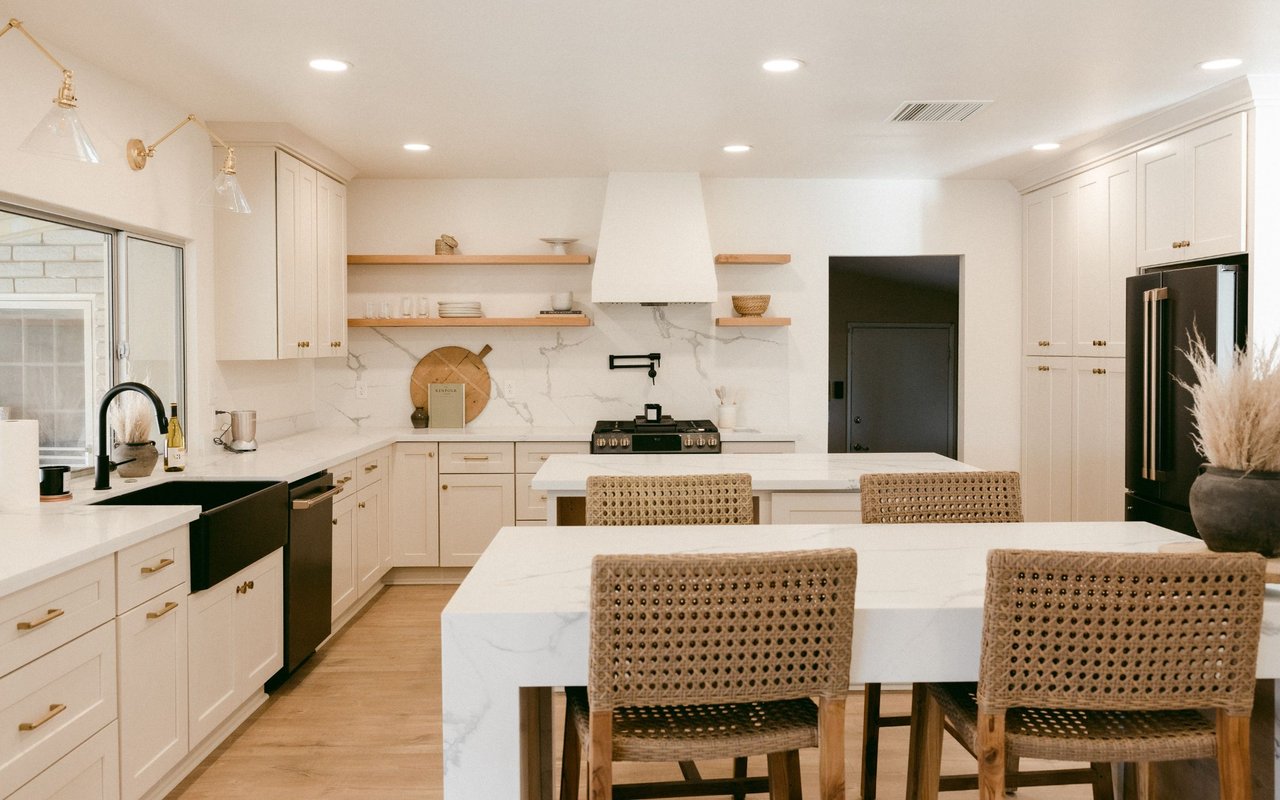
In April 2024, a house at 419 Willoughby Way sold for $108 million, the biggest single sale of the year in Aspen. Aspen Daily News described the property as sitting on the edge of the city limits. That phrase, tucked into a year-end market wrap-up, is doing more work than it looks like. On a sale of that size, the difference between falling inside Aspen's city boundary and just outside it is roughly $1.62 million in transfer tax alone, money that either flows to the city's housing and arts funds or doesn't get collected at all.
Most buyers assume a home marketed as Aspen, with an Aspen mailing address and an Aspen zip code, is subject to Aspen's rules. That assumption is wrong often enough to matter, and Red Mountain is where it shows up most visibly. The city's Real Estate Transfer Tax, known locally as RETT, applies only to property inside the actual incorporated limits of the City of Aspen, as the Pitkin County FAQ explains. Large stretches of Red Mountain, and pockets of other prized addresses nearby, sit in unincorporated Pitkin County instead. Two homes that look identical on a listing sheet, both photographed with the same view of Aspen Mountain, can carry a materially different bill at the closing table depending on which side of a line neither buyer can see.
What the 1.5% actually is
Aspen's RETT isn't a single tax. It's two separate taxes that voters approved decades apart and that happen to get collected together.
The first is a 0.5% tax that funds the Wheeler Opera House, approved by Aspen voters in 1978 and extended by later ballot measures through the end of 2039. In November 2021, voters expanded its use to include arts programming at the city-owned Red Brick Center for the Arts and removed a separate cap that had limited how much the fund could grant to arts organizations each year.
The second is a 1.0% tax dedicated to the city's affordable housing fund, approved in 1989 specifically because vacant land and existing buildings needed to be purchased, renovated, and built out to address a worsening housing shortage. That tax is set to sunset unless voters extend it again.
Together the two taxes total 1.5%, and the city's own transfer tax page is clear that the buyer, not the seller, is legally responsible for paying it. If it isn't paid, the city can place a lien on the property.
Here's the detail that trips people up: the $100,000 exclusion from taxable value applies only to the 1.0% housing portion. It does not reduce the 0.5% Wheeler portion. On a $2.5 million purchase, that means the housing tax is calculated on $2.4 million while the Wheeler tax is calculated on the full $2.5 million. It's a small distinction, but it's the kind of detail a title company should walk you through before you sign a closing statement, not after.
Where the line actually falls
The city's boundary is a legal line drawn by incorporation and annexation, not a description of how far the Aspen brand extends. A property can be marketed as Red Mountain, share a road with other Red Mountain homes, and still sit in unincorporated Pitkin County rather than inside city limits, the way the $108 million Willoughby Way sale sat at that very edge. The same kind of ambiguity applies to other outlying pockets loosely grouped under the Aspen umbrella, including parts of McLain Flats, where proximity to town doesn't automatically mean the city's tax code applies.
This isn't a quirk unique to one neighborhood. Confirming which side of that line a parcel sits on requires checking the legal description against the city's actual boundary, not the mailing address or the way a listing describes the area.
How Aspen compares to its neighbors
LegalClarity reports that Aspen isn't the only Colorado resort town with a local transfer tax, and it isn't the highest.
| Town | RETT rate | Notable structure |
|---|---|---|
| Aspen | 1.5% (0.5% Wheeler + 1.0% housing) | $100,000 exclusion applies only to the housing portion |
| Snowmass Village | 1% | Flat rate |
| Telluride | 3% | |
| Crested Butte | 3% | Split evenly between the town's capital fund and open space fund |
A buyer comparing an Aspen purchase to a similarly priced Snowmass Village or Telluride property isn't just comparing sale prices. They're comparing entirely different tax structures layered on top of those prices before a single box gets packed.
What the money is actually doing right now
The 2024 collection year gives a sense of scale. Aspen's RETT brought in $23.9 million that year, split roughly $15.8 million to housing and $8.1 million to arts and culture, well ahead of the city's $19.4 million budget projection. That's down from the pandemic-era peak of $31.9 million in 2021, but still nearly double the $12.8 million collected in 2019, the last full year before that boom.
Right now, a meaningful share of the housing portion is funding the Lumberyard, the city's largest current affordable housing project. Developer Gorman & Company reached financial closing on the project in March 2026 and has since begun construction on the first phase, a 104-unit building with occupancy planned for 2028. The full buildout calls for 277 rental units and an investment of roughly $250 million from the city's housing fund over the life of the project. When a buyer inside city limits pays the 1.0% housing RETT at closing, that money is going toward a building that's under construction today, not into a general fund that sits untouched.
Before you write an offer
A few questions are worth resolving before you get to a closing table, not after:
- Confirm the parcel's legal description against Aspen's actual city boundary, not the mailing address or the neighborhood name used in the listing. Your title company can verify this directly.
- Ask for the RETT computation and transmittal form early in escrow.
- If the property carries an existing affordable housing deed restriction, confirm its exemption status in writing rather than assuming it applies automatically.
- City code designates the buyer as legally responsible for the tax. Confirm that line item matches your contract before you sign.
None of this is tax or legal advice, and rates, exemptions, and boundaries can change with future ballot measures. The right move is always to verify current figures with your title company and the City of Aspen's finance department before you finalize a budget.
A few common questions
Does every property with an Aspen address owe the RETT? No. The tax applies only to property inside the incorporated City of Aspen. Homes in unincorporated Pitkin County, including some in areas commonly marketed as Aspen, are not subject to it.
Is the $100,000 exclusion applied to the whole 1.5% tax? No. It reduces the taxable base only for the 1.0% housing portion. The 0.5% Wheeler Opera House portion is calculated on the full sale price.
What happens if a deed-restricted affordable housing unit is involved? Existing deed-restricted affordable housing units are exempt from the housing portion of the RETT, along with a short list of other exemptions covering government transfers, gifts without consideration, transfers due to death or a will, and certain corrective deeds. Documentation is required to claim any of these.
The line between city and county doesn't show up on a real estate photo, and it rarely shows up in casual conversation about which neighborhood a home sits in. It shows up on a closing statement, and by then it's too late to negotiate around it. If you're comparing properties in Red Mountain, McLain Flats, or anywhere else near Aspen's edge, get the jurisdiction confirmed before you fall in love with the number on the listing.
Fiona Hagist works these boundaries daily across Aspen and the Roaring Fork Valley, from in-town condos to estates that sit right at the city line. If you're weighing a purchase and want a clear read on what a specific property will actually cost to close, get a free home valuation and start with the numbers that matter.