What makes a pied-à-terre in Aspen Core truly work? It is not just a pretty interior or a coveted address. If you plan to use your home as a refined, easy base for ski weekends, summer events, or quick mountain resets, the right design choices can make every arrival smoother and every stay more enjoyable. This guide will help you think through the features, tradeoffs, and questions that matter most in Aspen Core. Let’s dive in.
Why Aspen Core suits pied-à-terre living
Aspen Core is especially well suited to lock-and-leave ownership because daily life can be remarkably walkable. The City of Aspen runs free shuttles, free airport buses, and the Downtowner offers free door-to-door service, which reduces the need to rely on a car for every outing. In a downtown where parking is time-limited and seasonally priced, location and ease matter.
For ski-focused owners, proximity adds real value. Aspen Mountain’s Silver Queen Gondola rises from downtown, and Aspen Snowmass describes the ride from downtown to the mountaintop as about 15 minutes. That means a well-positioned condo can function as a true base camp for short stays rather than a larger second home that asks more of your time and attention.
Start with function, not square footage
When you are designing your ideal pied-à-terre, square footage is only part of the story. In Aspen Core, a smaller home with a smart layout often performs better than a larger one with awkward flow or limited storage. The goal is to support short visits, easy arrivals, and low-maintenance ownership.
A successful floor plan usually includes a clear entry sequence, practical storage, and some separation between sleeping and living spaces. Even if you are only staying for a few days at a time, you want the home to feel settled the moment you walk in. That sense of ease is often what separates a stylish condo from one that truly lives well.
Prioritize an efficient arrival zone
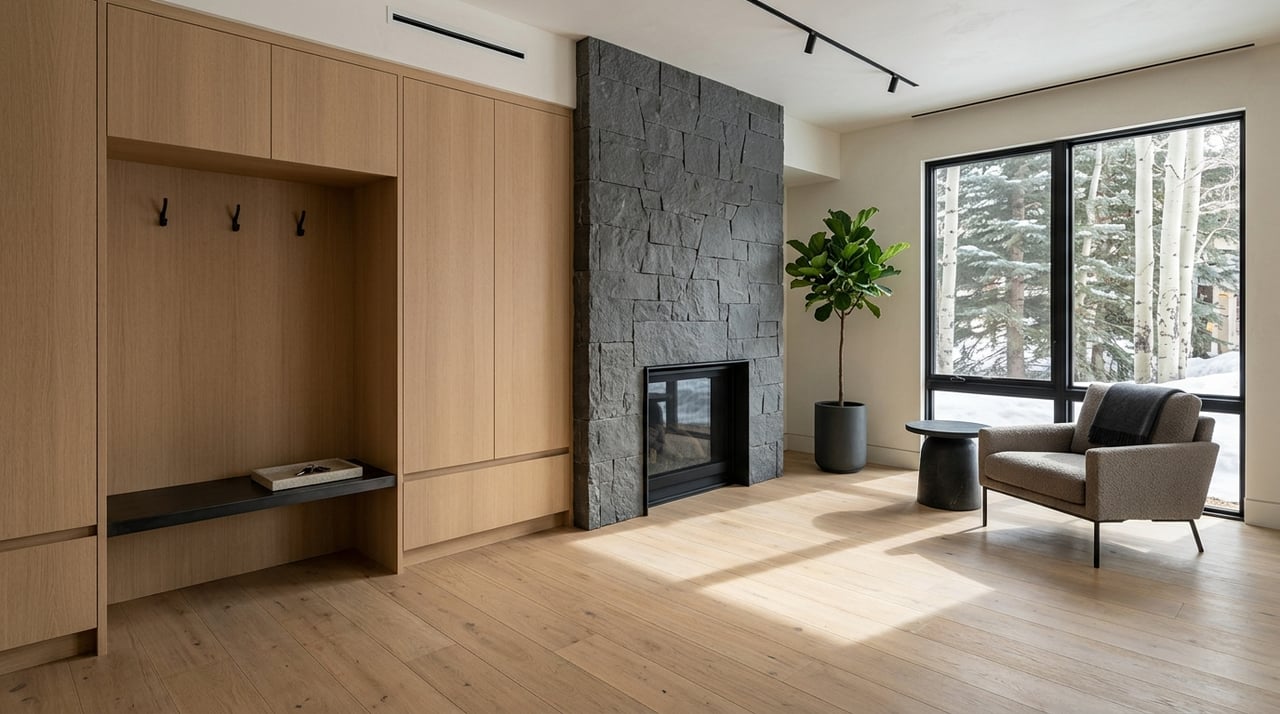
A pied-à-terre should welcome you in quickly and calmly. Look for an entry area where you can drop bags, coats, boots, and daily essentials without cluttering the main living space. In Aspen, where winter gear is part of daily life, this feature is more useful than it may first appear.
If the layout does not include a true mudroom, built-in cabinetry or a defined storage wall can still make a big difference. You want a place for the practical pieces of mountain living so the rest of the home stays polished and comfortable.
Create separation where it counts
Even a compact condo benefits from some distinction between public and private spaces. A bedroom that feels tucked away from the living area can make short stays more restful, especially if you host guests. This is less about formality and more about making the home flexible.
If you are considering a one-bedroom or compact two-bedroom, pay close attention to door placement, sight lines, and noise separation. A thoughtful plan can make a modest footprint feel far more livable.
Do not underestimate storage
In Aspen Core, storage is a lifestyle feature. Skis, boots, outerwear, luggage, owner items, and seasonal gear all need a place to go. If those pieces do not fit easily, the home can feel crowded very quickly.
Look for real closets, dedicated ski or gear storage, and room for owner lock-off needs if you plan to leave items behind between visits. In this market, storage often matters more than a little extra open floor area.
Treat access and parking as design essentials
In Aspen Core, parking and access are not secondary details. The city enforces downtown core parking from 10 a.m. to 6 p.m. with a four-hour limit, and there is no parking from 3 a.m. to 7 a.m. to allow for street cleaning and snow plowing. For occasional-use owners, that makes easy arrival and unloading especially important.
A deeded garage space can be highly valuable, not simply as an amenity but as part of how the property functions. Elevator access, sheltered entry, and a straightforward path from car to condo can make winter weekends far easier. If you picture arriving at dusk with luggage and ski gear, the right setup becomes obvious.
Features that simplify every visit
When comparing options, it helps to focus on practical convenience:
- Deeded or assigned garage parking
- Elevator service
- Easy unloading access
- Secure owner storage
- Ski or gear storage in the building
- Clear building entry and wayfinding
These details support the lock-and-leave experience. They may not be the most glamorous features on a showing, but they often have the greatest day-to-day impact.
Choose building services that reduce friction
The best Aspen Core pied-à-terres do more than offer a lovely interior. They sit in buildings that support part-time living with services that keep ownership simple while you are away. In many cases, this is where a property’s real long-term value is felt.
The most useful building-level amenities are the ones that reduce owner effort. Garage parking, elevator service, package receiving, housekeeping, front desk or concierge coverage, responsive maintenance, and gear storage can all contribute to a smoother experience. Aspen’s transit options help with local mobility, but they do not replace the convenience of a well-run building.
Ask what the HOA really covers
Not all service packages are equal. As you compare properties, ask exactly what is included in HOA dues and what is handled separately. This helps you understand both your carrying costs and your expected level of support.
For many buyers, the sweet spot is a well-managed building that balances service with simplicity. You may not need every luxury offering, but you do want dependable upkeep and a clear ownership structure.
Plan around Aspen’s historic rules
Aspen Core includes historic properties and historic districts, and that can affect your design plans after closing. The Historic Preservation Commission reviews work on designated properties and in historic districts, and the city notes that some exterior work and even some interior work can require approval before work begins. Window replacement and HVAC changes are among the examples the city highlights.
This does not mean you should avoid historic properties. It simply means you should evaluate them with clear expectations. If your vision includes major updates, custom windows, or mechanical improvements, it is important to understand the review process early.
Renovation questions to ask before you buy
Before moving forward on a condo you hope to refresh, ask:
- Is the property in a historic district or otherwise designated?
- What recent upgrades have already been approved?
- Would planned window, HVAC, or exterior changes require city review?
- Is the existing condition suitable for near-term use if approvals take time?
For some buyers, a recently renovated condo will be the easiest fit. For others, a property with character and a measured improvement path may still be the right choice.
Think carefully about rental flexibility
If you want your pied-à-terre to serve as both a personal retreat and a seasonal rental asset, local rules need to shape your buying strategy. In Aspen, rentals under 30 days require a short-term rental permit and an STR-specific business license. The city distinguishes between Owner-Occupied, Classic, and Lodging Exempt permits.
Owner-Occupied permits are limited to 120 nights per year. Classic permits do not have an annual night cap, though they may be limited by zone district. In Commercial Core and several lodge-related zone districts, the city states there is no limit to the number of Classic STR permits.
Building type matters for STR use
Aspen’s rules also treat certain building types differently. The city defines a lodge as a building or parcel with at least 15 overnight units that has common reservation and cleaning services, combined utilities, on-site management and reception services, plus three or more specified amenities. Owners in lodge or condo-hotel properties are not eligible for the Lodging Exempt permit and must instead use a Classic or Owner-Occupied permit.
For buyers, that creates an important tradeoff. A highly serviced building may offer a wonderful ownership experience, but you still need to understand how the property fits into Aspen’s permit structure if rental flexibility matters to you.
Match your budget to your lifestyle goals
Aspen Core condos remain expensive, and inventory can be relatively thin. Aspen Board of REALTORS market updates showed Aspen townhouse and condo median sales prices of about $3.25 million year-to-date in May 2025 and $3.3 million year-to-date in June 2025, with months’ supply around 7.3 in May and 9.2 in June. The reports also note that monthly activity can look extreme because of small sample sizes.
For that reason, it is often more useful to think about value in terms of function rather than size alone. In Aspen Core, building quality, service package, location, and practical livability can carry just as much weight as square footage.
A simple way to frame tradeoffs
Here is a useful way to think about the market:
- Lower end of the core condo segment: You are often balancing location against footprint and storage.
- Middle of the market: Renovated one- and two-bedroom condos with elevator, garage, and HOA services often offer the best lock-and-leave fit.
- Higher end: You may gain larger entertaining spaces, premium finishes, and more services, but carrying costs and replacement pricing usually rise as well.
The right answer depends on how you will live in the home. A beautifully run, compact condo near the gondola may serve you better than a larger property that adds friction.
Questions to guide your search
When touring Aspen Core options, it helps to keep a focused checklist. The strongest pied-à-terre choices usually answer a short set of practical questions very well.
Use this list to stay grounded in what matters most:
- Is the condo close enough to downtown and the gondola to minimize car dependence?
- Is there deeded parking, and how easy is winter arrival and unloading?
- How much storage is available for skis, boots, luggage, and owner items?
- What building services are included in HOA dues?
- Does the building allow short-term rentals, and which permit type applies?
- Is the property in a historic district, and what upgrades may need city review?
If a condo performs well on these points, it is much more likely to feel effortless over time.
A great Aspen Core pied-à-terre is not necessarily the biggest or the newest option on the market. It is the home that lets you arrive easily, settle in quickly, enjoy downtown Aspen and the mountain with minimal friction, and leave with confidence when the weekend ends. If you are thinking about buying in Aspen Core and want a thoughtful, lifestyle-first perspective on which properties truly function well, Fiona Hagist can help you narrow the field with local insight and a tailored approach.
FAQs
What makes an Aspen Core condo good for pied-à-terre living?
- The best fit usually combines walkability, efficient layout, strong storage, easy building access, and services that support lock-and-leave ownership.
What parking features matter most in Aspen Core?
- Deeded garage parking, easy unloading, and elevator access matter because downtown parking is time-limited during the day and restricted overnight for street cleaning and snow plowing.
What renovation issues should buyers watch in Aspen Core?
- Buyers should confirm whether a property is in a historic district or is otherwise designated, because some exterior work and certain interior changes such as windows or HVAC may require city approval before work begins.
What short-term rental rules apply to Aspen Core condos?
- Rentals under 30 days require an STR permit and an STR-specific business license, and the applicable permit type depends on factors such as owner occupancy, zone district, and building type.
What building amenities help most with lock-and-leave ownership in Aspen Core?
- The most useful amenities are typically garage parking, elevator service, ski or gear storage, package receiving, housekeeping, front desk or concierge coverage, and responsive maintenance.
What price tradeoffs should buyers expect in Aspen Core?
- In general, lower price points often require compromise on footprint or storage, mid-range options can offer the best balance of renovation and services, and higher price points usually bring more space and services along with higher carrying costs.